Everyday lighting guide
Warm-White Permanent Lighting for Everyday Curb Appeal
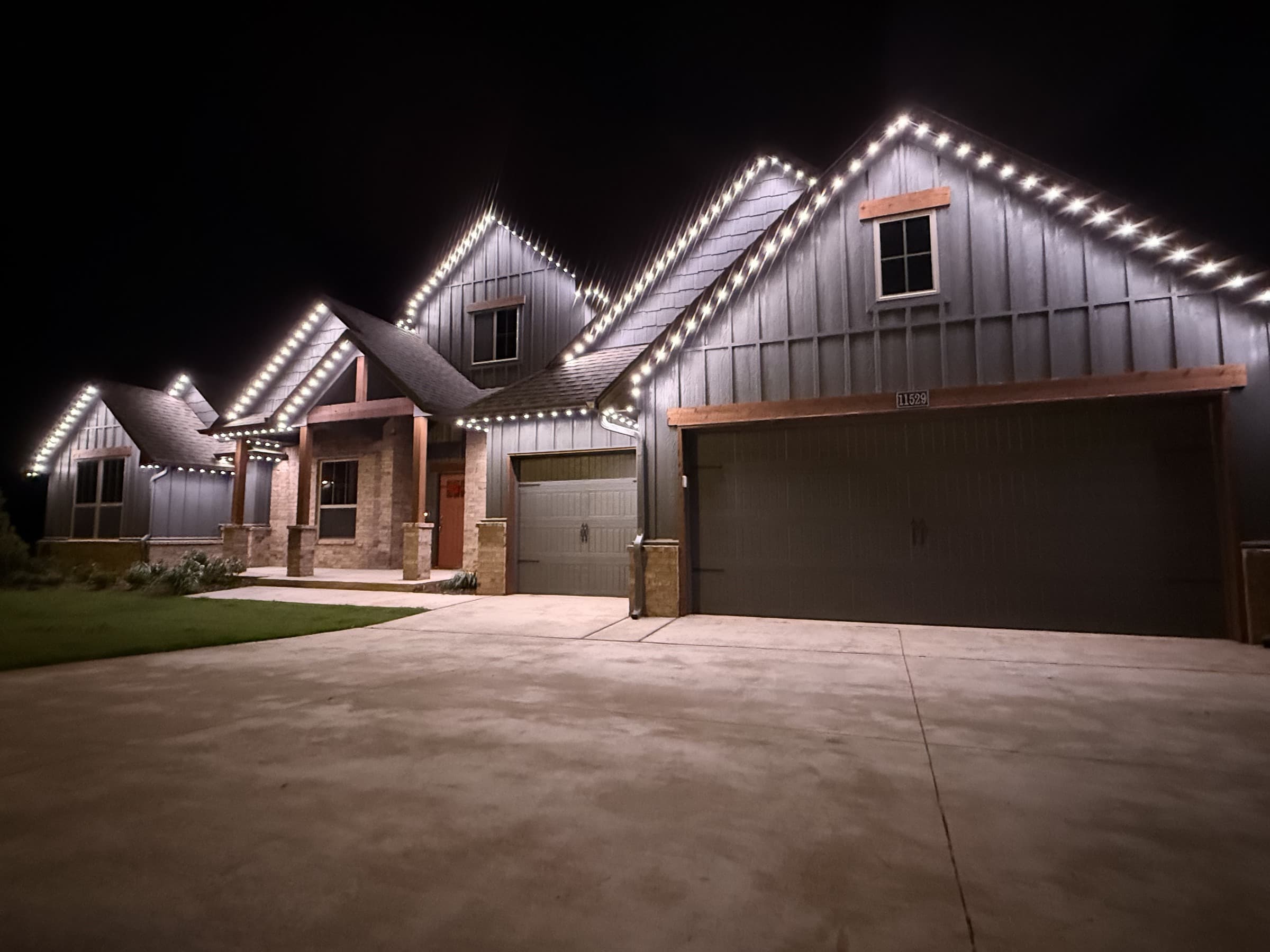
Permanent lighting is not just Christmas lights left up all year. For homeowners who want year-round curb appeal, one of the most useful everyday modes is quiet architectural lighting: the roofline traced in white on a sunset timer, bright enough to define the house without glare. How good that looks depends on how the white is produced, which white you choose and how bright you run it.
Everyday lighting, not a light show
Holidays and game days are a small share of the year. The rest of the time, a permanent system is either off or acting as architectural lighting. Designing for those everyday nights first, and then making sure the same layout works in color, gives a better result than designing for Christmas and living with it the rest of the year.
Set a sunset timer and the roofline comes on in white each evening and turns off at a time you choose, with no need to open the app.
Why a dedicated white channel matters
RGB lights make white by mixing red, green and blue. It can look white at a glance, but it is made of three narrow bands of color, so surfaces lit by it can look flatter or slightly off. A dedicated white LED produces a broader spectrum on its own, which generally renders stone, brick, wood and paint more naturally.
Each TruLight light has 6 LEDs: 3 RGB LEDs for color and 3 dedicated warm-white LEDs for white. The full explanation is in our RGB vs RGBW guide, and the specifications are on the TruLight page.
Warm, neutral or cool white?
| White | How it looks | Often suits |
|---|---|---|
| Warm white | Soft, golden, inviting | Masonry, wood, warm paint colors, traditional homes, everyday evenings |
| Neutral or pure white | Clean and balanced | Mixed materials, homeowners who find warm white too yellow |
| Cool white | Crisp, bright, slightly blue | Modern exteriors, very white siding, a deliberately bright look |
Warm white suits a lot of homes, but it is not objectively right for every one. Some homeowners prefer a cleaner neutral white, especially on bright white siding or modern exteriors.
Warm white vs cool white on the same home
The same multi-gable home in warm white and in bright cool white. Warm white reads softer against the gray siding and stone; cool white looks brighter and more modern.
Warm white 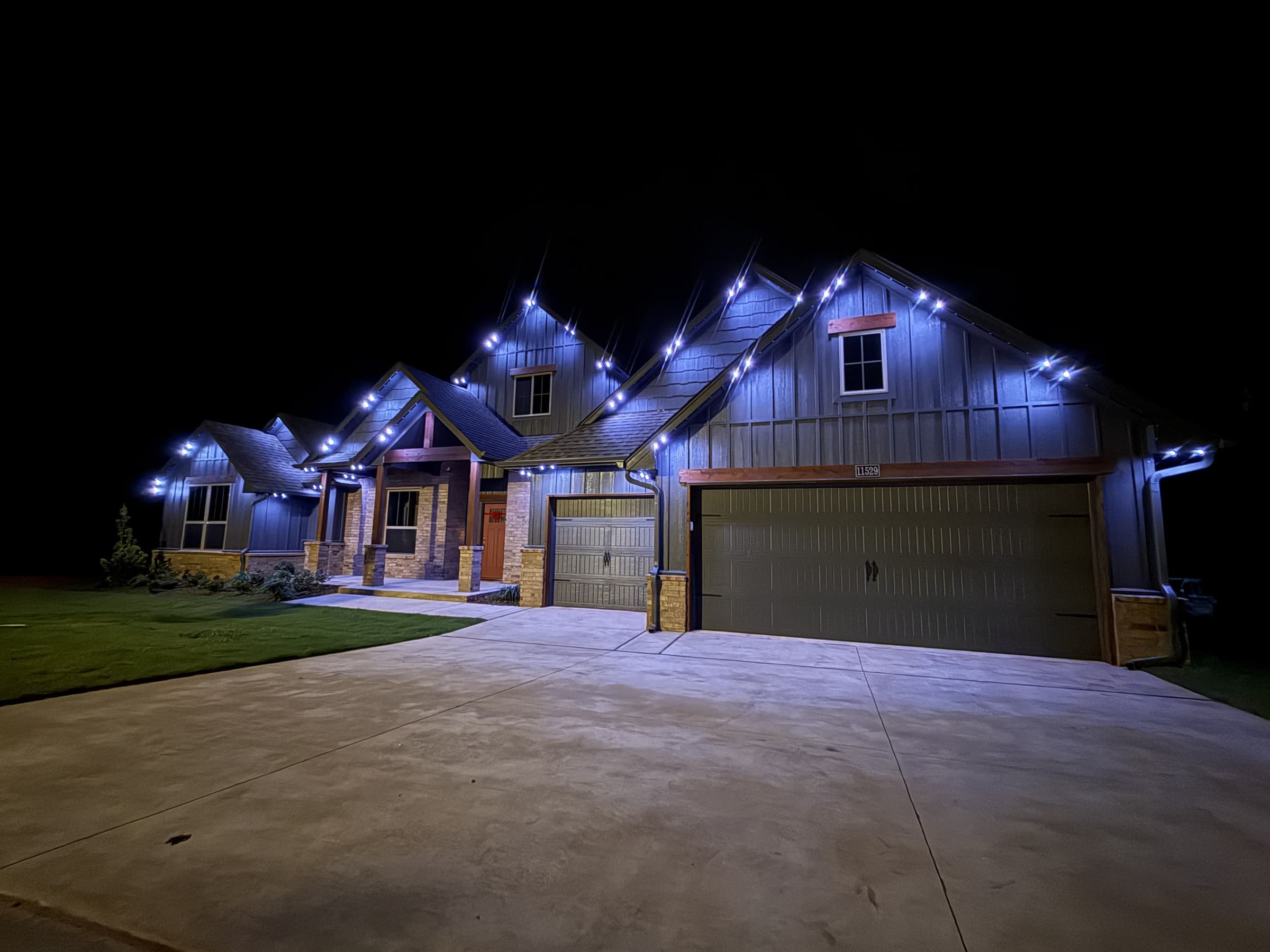
Cool white
TruLight installation example: one home photographed from the same angle in each scene, not separate installations.
Brightness vs tasteful intensity
TruLight lists 90–120 lumens per light at full brightness. That headroom is useful for holidays and events, but everyday architectural lighting often looks best below full output, enough to define the roofline without glare toward the street or neighbors.
The material matters too. Light stucco and siding reflect a lot of light, so a lower setting still reads strongly. See stucco and siding homes. Brick and stone absorb more and show texture, as covered in stone and brick homes.
The same layout, switched to color
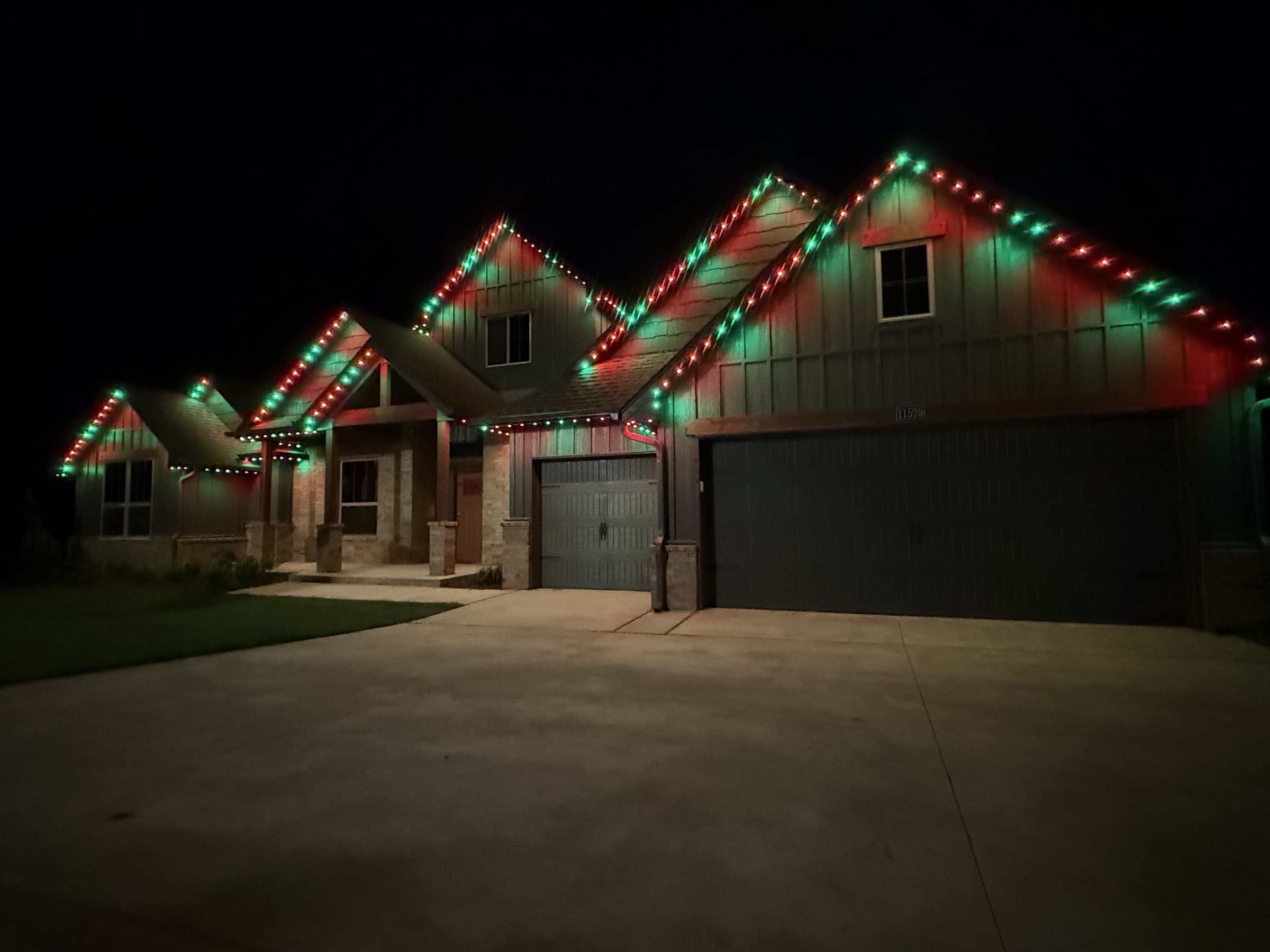
Because the lights are permanent, the layout you choose for everyday white is also the layout your holiday and event scenes use. The red-and-green scene here is the same home as the warm-white example above. You can schedule holiday scenes ahead of time and return to warm white afterward.
More scenes on one home are shown in our two-story and multi-gable guide.
Extending warm white to the yard
Everyday white lighting looks most finished when the ground level has some light too: the walk, the entry, a tree or stonework. Landscape accents in a matching warm tone keep the house and yard consistent. See designing roofline and landscape lighting together.
Ready to price it? See how pricing works or request a free quote, and ask to compare warm and cooler white during your consultation.
Warm-white lighting FAQ
Are permanent lights only for Christmas?
No. With a dedicated white channel, the same lights can run as everyday architectural lighting on a sunset timer and switch to holiday or event colors when you want them.
How does TruLight produce warm white?
Each TruLight light has three dedicated warm-white LEDs alongside three RGB LEDs, so warm white comes from white emitters rather than only from mixing red, green and blue.
How bright should everyday lighting be?
Everyday architectural lighting often looks best below full brightness. Full output is useful for holidays and events, while a lower setting keeps the roofline defined without glare.
Is warm white the right choice for every home?
No. Warm white suits many exteriors, especially masonry and warm-toned materials, but some homeowners prefer a neutral or cooler white on modern or very light exteriors. Seeing both on your own home is the best test.
See Warm White on Your Home
Request a free on-site consultation and compare warm and cooler white on your own exterior.